Cluster Rush
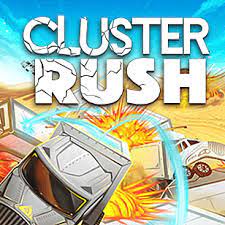
Cluster Rush is now unblocked! Play this wild parkour truck-jumping game online for free. Reflexes and speed are your best friends—no install required.
Popular Games










You May Like











Cluster Rush is a fast-paced platformer and reflex game that wastes absolutely no time showing you what it’s about: jumping across a convoy of moving trucks at full tilt and trying not to get launched into oblivion. Its pitch is simple, but its pressure ramps up fast. The controls are easy to grasp, yet the second those trucks start swerving, crashing, and pulling apart, that simplicity turns into a white-knuckle test of timing and nerve.
What Is Cluster Rush?
If you’re wondering what is Cluster Rush, the short answer is this: it’s a browser game built around sprinting, jumping, and clinging across moving trucks without falling. More specifically, it’s a reflex game disguised as a simple platformer. You’re not exploring big levels or solving elaborate puzzles; you’re hanging on for dear life while the floor beneath you barrels forward like it’s trying to buck you off.
The fantasy is immediate and clean. In most platformers, the ground is something you can trust. In Cluster Rush, the ground is a lie unless it has wheels.
What Makes the Game Different
What makes Cluster Rush stand out is that it replaces stable footing with constant motion. Instead of hopping across fixed platforms, you’re leaping between moving trucks that can tilt, crash, split apart, or disappear from under you. That alone adds pressure, but the immersive perspective cranks it further. Every jump feels a little more dangerous when your whole view is committed to the chaos.
There’s also a rhythm to it. Not a strict music-game structure, exactly, but a flow that makes movement feel half musical, half survival drill.
Why People Search for It
A lot of players look up Cluster Rush because it’s fast, easy to access, and tough in a satisfying way. It’s the kind of browser game you can load quickly, fail in seconds, and immediately want another shot at. That low barrier to entry and high replay value do a lot of the heavy lifting.
How to Play Cluster Rush
Core Objective
Learning how to play Cluster Rush is straightforward on paper: stay on top of the speeding trucks, move toward the end of the level, and don’t fall. In practice, that’s where the easy part ends. Your job is to survive a moving obstacle course where the platforms are alive, unstable, and more than happy to throw you into the void if your timing is even slightly off. You’re not just avoiding gaps, either; collisions, sudden shifts, and surprise hazards can wreck a run in an instant.
The Basic Gameplay Loop
Each level starts by dropping you onto a truck already in motion. From there, you need to read the path ahead, pick your landing spot, jump at the right moment, and then correct your position as soon as your feet touch down. That last part matters more than it first seems. A decent jump can still turn into disaster if you land awkwardly and fail to stabilize before the next problem rolls in.
Then you do it again, and again, until you either reach the finish or get pitched off the convoy.
Why the Game Feels Hard So Quickly
A big reason people ask why is Cluster Rush hard is because almost nothing stays predictable for long. Trucks shift. Paths bend. Obstacles appear with barely any warning. The margin for error is tiny, and the punishment is immediate. One bad read can unravel a run in less than a second.
The Right Mindset for New Players
That’s why any good Cluster Rush beginner guide starts with the same lesson: stop trying to look cool. Survival matters more than style. Controlled timing beats panic, and reading your next landing is far more important than making a desperate last-second leap.
Cluster Rush Controls
At a glance, Cluster Rush controls are about as simple as they come: move left, move right, jump, and hold to climb. That’s it. On keyboard, you’ll typically use the arrow keys or A/D to move, the spacebar to jump, and hold that same key to cling to a truck’s side. Some versions also let you use the J key as an alternative jump input, which can feel more comfortable depending on your setup.
Simple inputs, chaotic outcomes.
What Each Control Is Really For
Those basic keyboard controls pull a lot more weight than they first appear to. Moving left and right isn’t just for lining up jumps, it’s your primary tool for correcting mistakes after you land. Jumping is your lifeline, letting you clear gaps and dodge hazards, but it’s only as good as your timing. Meanwhile, holding to climb or side cling is your safety net, turning what would’ve been a failed jump into a shaky recovery.
Best Beginner Control Advice
Pick one control setup and stick with it. Constantly switching keys will only make things feel worse. Focus on learning the difference between a quick hop and a committed jump, and how each affects your landing.
|
Action |
Key/Input |
Best Use Case |
Common Mistake |
|
Move Left |
A / Left Arrow |
Adjust position before landing |
Overcorrecting mid-air |
|
Move Right |
D / Right Arrow |
Stabilize after landing |
Drifting off center |
|
Jump |
Space / J |
Cross gaps, avoid hazards |
Jumping too early or too late |
|
Climb / Cling |
Hold Space / J |
Recover bad landings, grab edges |
Not using it when needed |
Beginner’s Guide: How to Survive Your First Levels
Focus on Safe Landings First
If there’s one rule that defines the best beginner strategy in Cluster Rush, it’s this: stop trying to be flashy. Clean, stable landings matter far more than aggressive jumps. Staying near the center of a truck gives you room to react, while edge landings leave you one mistake away from disaster. Most early failures don’t come from bad jumps, they come from bad landings that spiral out of control.
Watch Ahead, Not Just Under Your Feet
New players tend to stare at the truck they’re standing on. That’s a trap. You should be scanning at least one or two trucks ahead, reading where the path is going before you commit. Tunnel vision will get you killed faster than any obstacle.
Timing Matters More Than Speed
Cluster Rush punishes impatience. Rushing jumps usually leads to awkward angles and missed platforms. Waiting half a beat, just long enough to confirm your path, often makes the difference between a clean transition and a failed run.
Stay Calm When the Pace Increases
As the speed ramps up, panic becomes your worst enemy. Overcorrecting, spamming inputs, or jumping without a plan will end runs instantly. One clean, deliberate move beats three desperate ones every time.
Common Obstacles and How to Avoid Them
Gaps and Falling Hazards
In Cluster Rush, the ground isn’t just dangerous, it’s game over. Most deaths come from poor landing angles rather than missed jumps. Landing too close to the edge or at a bad angle can send you sliding off before you even realize what happened. Staying centered and stabilizing quickly is the difference between survival and a short fall.
Crashes, Tilting Trucks, and Sudden Movement Changes
The trucks aren’t reliable platforms, they’re liabilities. They crash into each other, tilt unpredictably, and sometimes shift direction mid-run. The key is reading these movements early. If a truck looks unstable, it probably is. Commit too late, and you’re jumping into chaos instead of past it.
Blocks, Walls, and Path Obstructions
Fixed obstacles like walls or barriers force quick decisions. Sometimes the safest move isn’t forward, it’s sideways. Repositioning before a jump can open a cleaner path and prevent getting boxed in.
Falling Objects and Visual Disruption
Some hazards don’t block your path, they break your focus. Falling objects and visual clutter can distract you just long enough to mistime a jump. The best players learn to filter noise and lock onto what actually matters.
The Best Response System
Instead of reacting randomly, it helps to think in patterns. Here’s a simple obstacle-response framework:
|
Obstacle Type |
Warning Sign |
Best Move |
Recovery Option |
|
Gap |
Sudden spacing ahead |
Timed jump |
Cling if landing is off |
|
Tilting Truck |
Visible angle shift |
Jump early |
Adjust mid-air position |
|
Wall/Block |
Path obstruction |
Reposition before jumping |
Side cling if misaligned |
|
Falling Object |
Shadow or sudden motion |
Delay or redirect jump |
Quick lateral correction |
The 5 Core Skills You Need to Master
1. Jump Timing
Everything in Cluster Rush flows from jump timing. It’s the foundation that every clean run is built on, and when it’s off, everything else starts to unravel. Good timing doesn’t just get you across gaps, it sets up better landings, smoother transitions, and fewer panic decisions. Once your jumps become deliberate instead of reactive, the whole game starts to slow down in a way that feels almost unfair.
2. Position Correction
Perfect landings are rare. Recovering from imperfect ones is where consistency lives. Using left/right movement to stabilize immediately after contact is one of the most important Cluster Rush skills. The faster you correct your position, the less likely a small mistake snowballs into a full wipeout.
3. Cling and Recovery Control
Climbing and side cling aren’t backup options, they’re part of the core toolkit. Holding to grab a truck’s edge can turn a bad jump into a second chance, buying you just enough time to recover and re-center. Treat it like a safety net you actively use, not a last-ditch panic move.
4. Obstacle Reading
The best players aren’t faster, they’re earlier. They recognize unstable trucks, blocked lanes, and dangerous patterns before they fully form. That kind of movement mastery turns chaos into something readable.
5. Composure Under Speed
As the pace ramps up, panic becomes the real enemy. Calm decisions, even under pressure, create consistency where frantic inputs create failure.
Common Mistakes That Cause Instant Fails
Jumping Too Early or Too Late
Mistimed jumps are the root of most failures. Jump too early and you undershoot. Jump too late and you’re reacting instead of planning. Either way, one bad jump often leads to another, creating a chain reaction that ends your run before you can recover.
Overcorrecting in the Air
There’s a temptation to “fix” a bad jump mid-flight, but excessive movement usually makes things worse. Overcorrecting throws off your landing angle, turning a survivable mistake into a guaranteed fall.
Ignoring the Next Obstacle
A lot of players focus only on the truck they’re about to land on. That’s a short-term mindset in a game that rewards looking ahead. Strong runs depend on scanning forward and preparing for what comes next, not just reacting to what’s in front of you.
Panicking After a Bad Landing
This is where most runs truly fall apart. A slightly off landing leads to panic inputs, which leads to worse positioning, which leads to failure. Recovery techniques, like quick repositioning or using a side cling, are far more reliable than desperate jumps.
Treating Every Situation the Same
Not every problem is solved with a jump. Sometimes the correct move is to cling, delay, or reposition. Players who treat every situation identically hit a hard ceiling quickly.
|
Mistake |
Why It Happens |
What to Change Immediately |
|
Early/late jumps |
Poor timing awareness |
Wait and confirm landing path |
|
Overcorrecting mid-air |
Panic adjustments |
Commit to initial trajectory |
|
Tunnel vision |
Focus too close |
Scan 1–2 trucks ahead |
|
Panic after landing |
Loss of control |
Stabilize before next move |
|
Repeating same approach |
No adaptation |
Choose jump, cling, or reposition |
Jump, Cling, or Reposition?
- Clear path ahead → Jump
- Unstable landing → Cling
- Blocked route → Reposition first
These patterns explain why players keep falling in Cluster Rush, and more importantly, how to stop.
Best Strategies for Beating More Levels
Build a Repeatable Practice Routine
If you’re looking for real Cluster Rush tips and tricks, the answer isn’t grinding endlessly, it’s practicing with intent. Short, focused sessions work far better than long, sloppy ones. Play for a few minutes, notice where you consistently fail, and isolate that problem. Maybe it’s bad landings, maybe it’s late jumps, maybe it’s panic. Whatever it is, fix one thing at a time instead of trying to improve everything at once.
Learn the Pattern, Not Just the Moment
Cluster Rush isn’t random chaos, it just looks like it at first. The more you play, the more you’ll start recognizing patterns in how trucks move, how hazards appear, and where safe routes tend to form. Repetition sharpens your decision-making, turning reaction into anticipation.
Use a Smarter Improvement Method
A simple routine can speed things up dramatically:
- 5 minutes: focus only on landing cleanly
- 5 minutes: practice reading the path ahead
- 5 minutes: recover from bad landings using cling and repositioning
This kind of structure is how you beat hard levels in Cluster Rush without burning out.
Know When to Play Safe
Not every jump needs to be aggressive. Risky moves might look faster, but survival-first play clears more levels. The best strategies for beating more levels are the ones that keep you alive.
How Difficulty Progresses Across Levels
Early Game
At the start, Cluster Rush gives you just enough breathing room to learn the basics. The rhythm is slower, transitions are simpler, and mistakes are more forgiving. It’s a training ground, even if it doesn’t feel like one.
Mid Game
Then the pace picks up. Trucks move faster, obstacles become less predictable, and you’re forced to read ahead instead of reacting on instinct. This is where most players start asking, “Is Cluster Rush hard?”, and the answer becomes a clear yes.
Late Game
By the later levels, the margin for error shrinks dramatically. You’re dealing with tighter timing windows, layered hazards, and constant pressure. Small mistakes don’t just hurt, they end runs instantly.
Why This Difficulty Curve Works
The game teaches you just enough early on, then steadily demands better execution. It’s a clean progression from learning to mastery.
Similar Games If You Like Cluster Rush
If you’re hunting for games like Cluster Rush, you’re really looking for that same mix of speed, pressure, and precision. Geometry Dash leans harder into rhythm, turning timing into something almost musical, while Super Hexagon strips everything down to pure survival reflexes. Temple Run and similar endless runners trade tight control for forward momentum, but still capture that “one mistake and it’s over” tension. The biggest difference in a Cluster Rush vs Geometry Dash comparison is perspective, one is about forward flow, the other about lane-based timing, but they scratch a similar itch.
Cluster Rush FAQ
What is Cluster Rush?
Cluster Rush is a fast-paced reflex platformer where you jump across moving trucks without falling.
How do you play Cluster Rush?
You move left or right, jump between trucks, and use climbing to recover from bad landings.
What are the controls in Cluster Rush?
Standard Cluster Rush controls include movement keys, jump (Space or J), and hold to cling.
How many levels are in Cluster Rush?
The game features around 35 levels with increasing difficulty.
Is Cluster Rush hard?
Yes, its difficulty ramps up quickly and demands strong timing and focus.
Can you play Cluster Rush online for free?
It’s commonly available as a browser-based game, often free to access.
Can you play Cluster Rush on mobile?
Yes, though touch controls can feel less precise than keyboard input.
What is the best beginner strategy in Cluster Rush?
Focus on safe landings, look ahead, and avoid panic jumps.
Why do players keep falling in Cluster Rush?
Most failures come from poor timing, bad landings, or reacting too late.
What games are similar to Cluster Rush?
Geometry Dash, Super Hexagon, and other reflex-heavy platformers offer similar challenges.